

The current payment system is broken
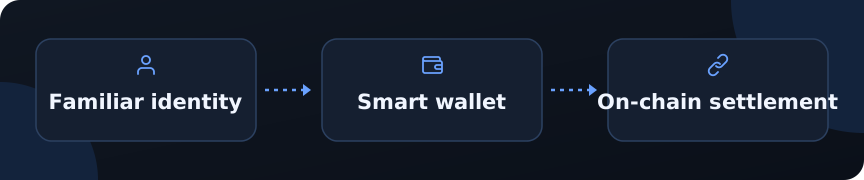
Sending money across a border still means asking for permission. Correspondent banks, compliance queues and transfer services each add delay, declines and fees. A gig worker in Nairobi paid by a client in London, or a family in Lagos supporting relatives in Accra, loses days and a slice of every payment to intermediaries. No banks. No borders. No intermediaries. Numpay replaces the banking stack with blockchain settlement and a simple identity layer.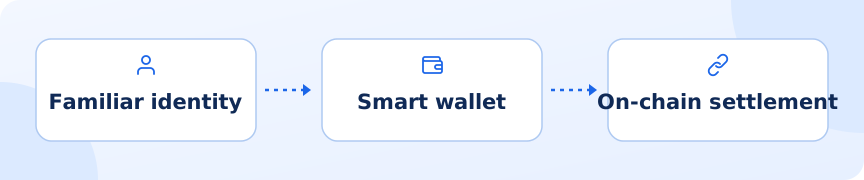
What we believe
Identity is a primitive, not an obstacle
Identity is a primitive, not an obstacle
A mobile number or email address should be enough to receive money. Numpay resolves these familiar identifiers to self-custodial wallets, so people use what they already have instead of learning wallet addresses.
Borderless by default, not by exception
Borderless by default, not by exception
Paying someone in Lagos from San Francisco should feel the same as paying a neighbour. Numpay runs on public blockchain rails that don’t know or care about borders: fast, final and free to the user.
On-chain by design
On-chain by design
Every payment is a real transfer on a public blockchain. There is no internal ledger of IOUs and no hidden fees. Anyone can verify that a payment happened and settled.
Optimized for real-world utility
Optimized for real-world utility
Numpay is designed for the 80%, not the 1%: freelancers, migrant workers, microbusinesses and global teams who need money to move, not a trading terminal.
Programmable and composable
Programmable and composable
Payments, requests and payment links are exposed through an API, so other apps, marketplaces and payout systems can build on the same rails.
The future of payments is here, and it’s as simple as clicking a button.